


South Tenerife for property owners: a neighbourhood-by-neighbourhood guide, from San Miguel de Abona to Los Gigantes
There's a conversation we have with almost every new owner who finds us. It usually starts with a question they've been chewing on for months:
"We're looking at a place in South Tenerife — is it a good area?"
It's the right question, just not quite at the right resolution.
South Tenerife isn't one market. It's at least eight, and the differences between them shape everything that follows — what kind of guest books the property, how long they stay, which weeks of the year perform best, what kind of styling resonates, and how the property should be positioned online.
We live here. We manage properties along this coast for a living. We watch the booking patterns, we hear the guest feedback, we understand the local rhythm of each town and each season. So when someone asks us "is it a good area?", we tend to answer with questions of our own: What kind of guest do you want to welcome? What season matters most to you? How hands-off do you want to be? And, lately: have you checked the zoning under Ley 6/2025?
This guide is our attempt to put that conversation on paper. We'll walk you through the South Tenerife coast from San Miguel de Abona in the east all the way to Los Gigantes in the west — the premium corridor where the most interesting short-term rental activity happens. For each area, we'll share what the guests are really like, what properties tend to perform, what the regulatory picture looks like, and what the stay itself feels like for the people who come.
We're a boutique management company, not an estate agency. We don't earn commission on property sales and we're not paid to champion any particular area. Everything below is what we'd tell a friend over coffee.
Let's start near the airport and head west.
San Miguel de Abona (including Golf del Sur and Amarilla Golf)
The character
San Miguel de Abona is the first real stop along the premium South Tenerife coast when you leave Tenerife South Airport. It's quieter than its neighbours to the west, more residential in feel, and built largely around two major golf courses — Golf del Sur and Amarilla Golf — plus the marina at San Miguel.
The atmosphere is unmistakably calm. You won't find a nightlife strip here. You will find long-term residents, semi-retired Northern Europeans, and couples in their fifties and sixties who return year after year. The pace is slow in a good way.
The guest profile
Guests who book in this area are rarely first-time visitors to Tenerife. They're repeat travellers who have been through the Playa de las Américas phase, decided it wasn't for them, and settled on San Miguel as their preferred base. They tend to:
Stay longer (7–14 nights is common; 21+ nights are not unusual in winter)
Book further ahead (often 4–6 months in advance)
Prefer properties with golf access or a genuine sea view
Bring their own cars rather than rely on taxis
Spend less per day on dining out and more on groceries and home-cooked meals
What performs
Two-bedroom apartments in golf-course complexes (especially Golf del Sur) and three-bedroom townhouses with private plots or shared pools. Villas with direct sea views at the top end. The complexes along the main access roads of Amarilla Golf perform particularly well — easy access is a genuine draw for guests arriving with rental cars, and the developments here include some of the most attractive properties in the area. Well-styled one-bedroom apartments with a golf or sea view hold their own, but plain studios without a distinguishing feature have a harder time standing out in a market this competitive.
Regulatory picture
San Miguel de Abona falls under the municipality of the same name. Under Ley 6/2025's zoning framework, eligibility for new VV licences is determined property by property — some of the older golf-side developments sit in mixed-use or touristic zones where the path is clearer; newer residential urbanisations further inland sometimes have more restrictions. Always a good idea to verify before offering.
Where we'd look
Golf del Sur for the reliable repeat-booking base and the mature infrastructure. Amarilla Golf for the newer, better-styled stock and strong road access. Properties with a real golf course or sea view outperform properties without one, almost regardless of size.

Los Cristianos
The character
Los Cristianos is the anchor of South Tenerife's short-term rental economy. It's old enough to have a real town centre, a working fishing port, and a genuine Canarian identity underneath the tourism. The beaches — Playa de los Cristianos, Playa de las Vistas — are among the few true sandy beaches on the south coast, and the ferry to La Gomera leaves from here, which brings an interesting cross-section of day-trippers and longer-stay guests through the area.
The guest profile
Los Cristianos draws a wider demographic than anywhere else on the south coast. Families, couples, solo travellers, older guests who want walkability, younger guests who want the port-town atmosphere — they all show up here. The median guest is probably a family of four in a two-bedroom apartment, staying 7–10 nights, doing a mix of beach, excursions, and eating out.
What performs
Apartments within 5–7 minutes' walk of either Playa de las Vistas or the main seafront promenade. A real sea view and a proper balcony are near-mandatory at the premium end. Two-bedroom units outperform one-bedrooms on a per-night basis because the market leans family-oriented. Accessible ground-floor apartments attract a loyal older demographic willing to book ahead, often a year in advance.
What to watch for
Los Cristianos has a dense short-term rental market, which means the properties that consistently perform at the top of the market are the ones that have something genuinely distinctive — thoughtful styling, a real terrace, a direct sea view, something that differentiates from the hundreds of similar two-bedroom apartments within a kilometre. The local comunidades vary on their attitude toward VV rentals; legal clearance from the estatutos de comunidad is essential before any purchase.
Where we'd look
The urbanisations in the stretch between Playa de las Vistas and Avenida de Los Playeros. Older buildings in the town centre can work beautifully if the apartment itself has something special — direct sea view, roof access, or a terrace with character.
Playa de las Américas and Costa Adeje (including Fañabé, Torviscas, and El Duque)
The character
This is the busiest, most developed, and most expensive stretch of South Tenerife — and the lines between Playa de las Américas, Fañabé, Torviscas, and El Duque blur as you walk along the seafront. Together they form the core of Costa Adeje, which is where a significant share of the island's premium short-term rental activity takes place.
At the eastern end, Playa de las Américas retains some of the livelier energy that built its early reputation. Move west — into Torviscas Bajo, Fañabé, and especially El Duque — and the tone shifts noticeably. El Duque, in particular, is genuinely upscale: five-star hotels, Michelin-recognised dining, and apartments that transact at the highest prices per square metre on the south coast.
The guest profile
Costa Adeje's guest base splits into two distinct groups. The first is the family holiday market: flights in from the UK, Germany, and the Netherlands, a week at a rental apartment with a pool, day-trips to Siam Park or Mount Teide. The second is a quieter, higher-spending segment — couples in their forties to sixties booking sea-view apartments in El Duque or Playa del Duque, often for 10+ nights, sometimes in combination with a stay at one of the five-star resorts.
What performs
In Costa Adeje, quality lands more bookings than almost anywhere else on the coast — especially when it's paired with the right location. Sea-view apartments in El Duque, Playa del Duque, or the upper end of Fañabé perform exceptionally well. The boutique rentals that stand out here are the ones that visibly differentiate from the very broad supply of two-bedroom apartments — a styled interior, a real terrace, a signature feature.
Regulatory picture
Costa Adeje falls under the municipality of Adeje, which has its own approach to tourism zoning. Large parts of the coast sit in mixed-use or turística zones where VV licensing has historically been accessible. But a meaningful portion of the housing stock is in residential-only buildings where the comunidad prohibits short-term rentals — probably the single most important thing to verify before offering on a property here. Always check the estatutos de comunidad first.
Where we'd look
El Duque or Playa del Duque for the premium segment. Torviscas Alto for a quieter setting with walking-distance access to the coast. Fañabé for apartments with a direct sea view and strong family appeal.
Playa Paraíso and La Caleta
The character
A pair of small coastal enclaves west of Costa Adeje, both belonging to the Adeje municipality. Playa Paraíso is built around a rocky headland with a handful of hotels, apartment complexes, and one of the most interesting private-pool microclimates on the coast. La Caleta, just to the south, is an old fishing village that has been gently upgraded over the past 15 years into something genuinely charming — whitewashed houses, small seafood restaurants, a marina for small boats.
The guest profile
Couples and small families looking for something slightly off the main tourist track, but still with reliable infrastructure. La Caleta in particular attracts guests who've "done" the main resorts and want a more local-feeling stay.
What performs
Sea-view apartments in Playa Paraíso, especially those with access to a well-maintained pool complex. Small boutique properties in La Caleta command an outsized premium because the supply is thin. A 2-bedroom apartment in La Caleta can sometimes out-earn a much larger unit in a mid-tier Costa Adeje complex, simply because fewer options exist and the area has a distinct identity.
Where we'd look
La Caleta first, if you can find something — the supply is genuinely tight. Playa Paraíso second, with a strong preference for the seafront-facing complexes.
Callao Salvaje
The character
Callao Salvaje is a quieter coastal area between Playa Paraíso and Playa San Juan, built primarily in the 1980s and 90s. Several complexes have been renovated in recent years, and the area has been quietly gaining ground with guests who want the South Tenerife coast without the Costa Adeje density.
The guest profile
Long-stay guests. Northern Europeans. Couples who book for 2–3 weeks at a time. Not a first-choice for short stays or families with small children looking for sandy, buggy-friendly beaches.
What performs
Apartments with a full sea view, a modern interior, and access to a pool. The renovated stock commands a clear premium over older, unrenovated units — styling and interior quality make a bigger difference here than in some of the more tourism-dense areas.
Where we'd look
The newer and recently renovated complexes along the main coastal road — the ones that have clearly been brought up to contemporary standard. Fully renovated apartments in older buildings can be genuinely attractive if the interior has been done well.
Playa San Juan
The character
Playa San Juan is a working Canarian town with a genuine fishing harbour and one of the nicest small promenades on the south coast. It sits within the municipality of Guía de Isora, which has taken a more measured approach to tourism development than Adeje. The town has a real community — schools, local shops, a fish market that actually sells fish that was caught that morning.
The recent uplift has come from the arrival of The Ritz-Carlton Abama just north of town, which brought a whole new guest profile to the area.
The guest profile
A split market. On one side, the original Playa San Juan guest: Northern European, often older, booking for 2–4 weeks, looking for a real Canarian town rather than a resort. On the other, a newer guest attracted by the Abama effect — younger couples, often working remotely, looking for a boutique coastal stay.
What performs
Apartments on or near the paseo marítimo. Properties with a genuine sea view — "sea view" is sometimes generous in listings, so it's worth being specific. Newer developments in the higher parts of town have been attracting strong interest, particularly the ones with good sight-lines to the coast.
Where we'd look
On or within 5 minutes' walk of the paseo marítimo. The quieter streets above the harbour. Newer developments with a clear view corridor to the sea.
Alcalá
The character
If Playa San Juan is a working Canarian town, Alcalá is its slightly more discovered cousin. Still within Guía de Isora, still small, still with a fishing-boat harbour — but with a more restaurant-forward scene and the arrival of some genuinely well-designed small properties over the past five years.
The guest profile
Couples, small families, returning guests. People who want "the real Tenerife" but in a version that's still walkable and comfortable. The typical stay is 7–10 nights.
What performs
Boutique one- and two-bedroom apartments with design-forward interiors. Character matters more than raw size here — a well-styled 55m² apartment with a rooftop terrace can out-earn a generic 90m² unit in a larger complex.
Where we'd look
Close to the plaza and the harbour. The small new developments along the seafront to the south of the village.
Puerto de Santiago and Playa de la Arena
The character
Puerto de Santiago is the southern gateway into the Los Gigantes area. It sits in the municipality of Santiago del Teide — the same municipality that was recently distinguished with the Q-flag for tourism quality. Playa de la Arena, with its dramatic black volcanic sand, is the main beach of the area and one of the most photographed on the island.
This is where the coast starts to feel different. The cliffs rise, the landscape becomes more dramatic, the pace slows again. It's a visible change — guests who drive from Costa Adeje often comment on it.
The guest profile
A reliably returning market. Many of Puerto de Santiago's guests have been coming for 10–20 years. They tend to be couples, older families, and an increasing number of younger guests who've discovered the area through whale-watching tours (which leave from Los Gigantes marina just up the road). The average stay is 10–14 nights.
What performs
Sea-view apartments with a direct line of sight to La Gomera across the water. Properties with private terraces. Ground-floor apartments with direct sunrise-to-sunset terraces are highly sought after. The newer developments on the edges of Puerto de Santiago have performed well, particularly those in the Callao area.
Where we'd look
The seafront of Puerto de Santiago. The streets directly above Playa de la Arena. The hillside complexes with western-facing views toward La Gomera.
Los Gigantes
The character
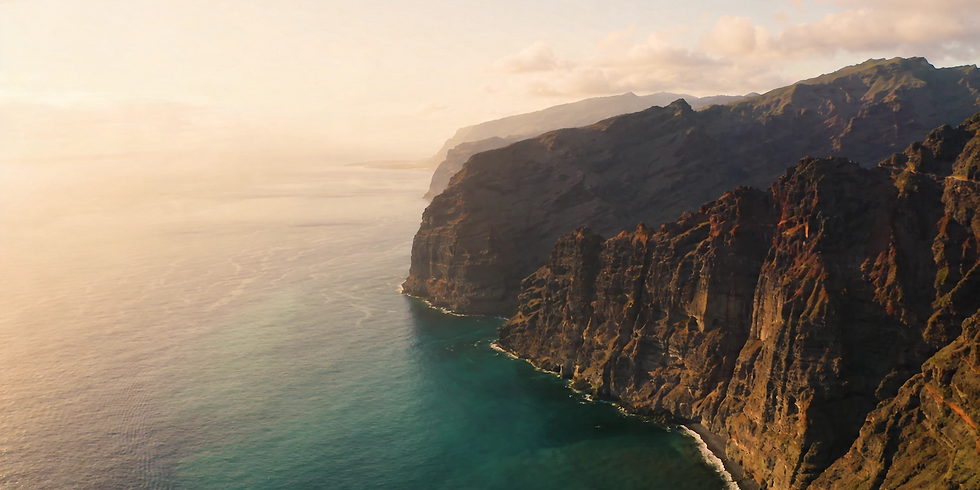
This is home for us, so we'll try to stay objective. Los Gigantes is a small town built at the base of a cliff face that rises 600 metres directly out of the Atlantic. The scale is genuinely unusual — there aren't many places in Europe where the geography is this dramatic at this proximity to a town centre.
The town itself is compact. You can walk from one end to the other in 15 minutes. There's a marina, a small black-sand beach — Playa de los Guíos — a handful of genuinely good restaurants, and a steady rhythm of whale-watching boats going out into some of the richest cetacean waters in Europe.
What Los Gigantes is not is a resort town in the Costa Adeje sense. There's no shopping centre, no Siam Park equivalent, no all-night entertainment strip. What it has instead is quiet, drama, and a loyal returning clientele.
The guest profile
Los Gigantes' guests are mostly people who've chosen it deliberately. They've either been before, or they've been referred by someone who has. They skew older, more affluent, more inclined to long stays, and more willing to pay a premium for a property with a genuine cliff view. Younger guests — often couples in their thirties — are a growing segment, drawn by hiking, whale-watching, and scenic photography.
What performs
Anything with a direct cliff view outperforms anything without one — this is the single biggest price-setter in Los Gigantes. Secondary drivers: a private pool (rare and therefore valuable), a proper terrace with sun exposure, walking distance to the marina and the beach. Three-bedroom apartments and small villas at the premium end. Well-styled one-bedroom apartments can perform beautifully if the location and view are right.
Regulatory picture
Los Gigantes sits in the municipality of Santiago del Teide, which interprets Ley 6/2025 within its own local framework. The short-term rental market here has a longer history than in most South Tenerife municipalities, and the regulatory picture is genuinely complex — different zones, different buildings, different comunidades all have different rules. For any property purchase in Los Gigantes, the legal and zoning check isn't optional; it's the first step.
Where we'd look
The streets immediately above the marina (Avenida Maritima and its offshoots) for cliff-view apartments. The Los Gigantes del Mar area for premium units with pool access. The upper hillside for genuinely dramatic full-panorama views.
What a stay looks like, and what that means for you
If you've read this far, you've probably noticed that we didn't try to rank these areas. That's deliberate. The right area for a rental investment in South Tenerife depends entirely on what kind of operation you want to run — and more importantly, what kind of experience you want the guest to have when they arrive.
Close your eyes for a moment and picture it.

A stay in San Miguel de Abona starts with an early round of golf while the course is still cool, coffee on the clubhouse terrace afterwards, an afternoon by the pool, dinner somewhere quiet. It's the rhythm of people who've done the busy holidays and now want something gentler.
A stay in Los Cristianos is louder, faster, more alive. It's flip-flops from front door to beach in four minutes, seafood at the port, children asleep on the sofa after a long day at Las Vistas.
A stay in Costa Adeje is about access to the best of everything within a small radius. Breakfast on a sun-drenched balcony, a day at Siam Park or a spa afternoon, dinner in El Duque, a late walk along the seafront.
A stay in La Caleta or Playa San Juan is slower, more local, more intimate. It's the quiet pleasure of a town that still feels like itself — fish at lunch, a walk to the harbour at dusk, the Canarian evening light on white walls.
A stay in Los Gigantes is, and we say this with some bias, the stay people write about afterwards. The cliff at dawn. The silence of the terrace at night. The feeling of being somewhere that hasn't been flattened into every other holiday brochure.
The part that's usually left out
Here's something most property guides don't tell you. What happens after an owner chooses an area — after the paperwork is signed and the keys change hands — matters far more than most new investors expect.
The quiet, unglamorous decisions of day-to-day operations are what separate a property that earns €35,000 a year from a near-identical one that earns €55,000. Pricing calibration that responds to demand. Listings that convert the right guest rather than any guest. Presentation that photographs properly. Communication that makes a 10pm arrival feel welcomed instead of tolerated. These aren't magic. They're just the craft.
Across our portfolio in 2026, we're running an average occupancy rate of 85.3% — meaningfully above the market average in Tenerife, which tends to sit closer to 75–77%.
That gap doesn't come from owning the best areas. It comes from the thousand small decisions that happen between the moment an owner hands over the keys and the moment a guest writes a five-star review. Most of those decisions happen in the background and are never visible to a guest — but they're visible in the numbers at the end of the year.
If you're considering a property along this coast — whether you've already made an offer or you're still in the research phase — we'd be happy to share what we've learned. Not as a sales pitch, and not with any pressure. Just a proper conversation about the area you're looking at, what kind of guests it tends to attract, what questions to ask the seller, and what to watch for in the comunidad paperwork.
Come and have a coffee with us. That's the best way to start. Or reach out and let's start talking.
Bart & Steffi
Hermosa Rentals


Comments